Parent guide
How to know if your child needs a Maths tutor.
A low mark is one sign, but it is not the only one. Many learners need support before the report card makes the problem obvious.
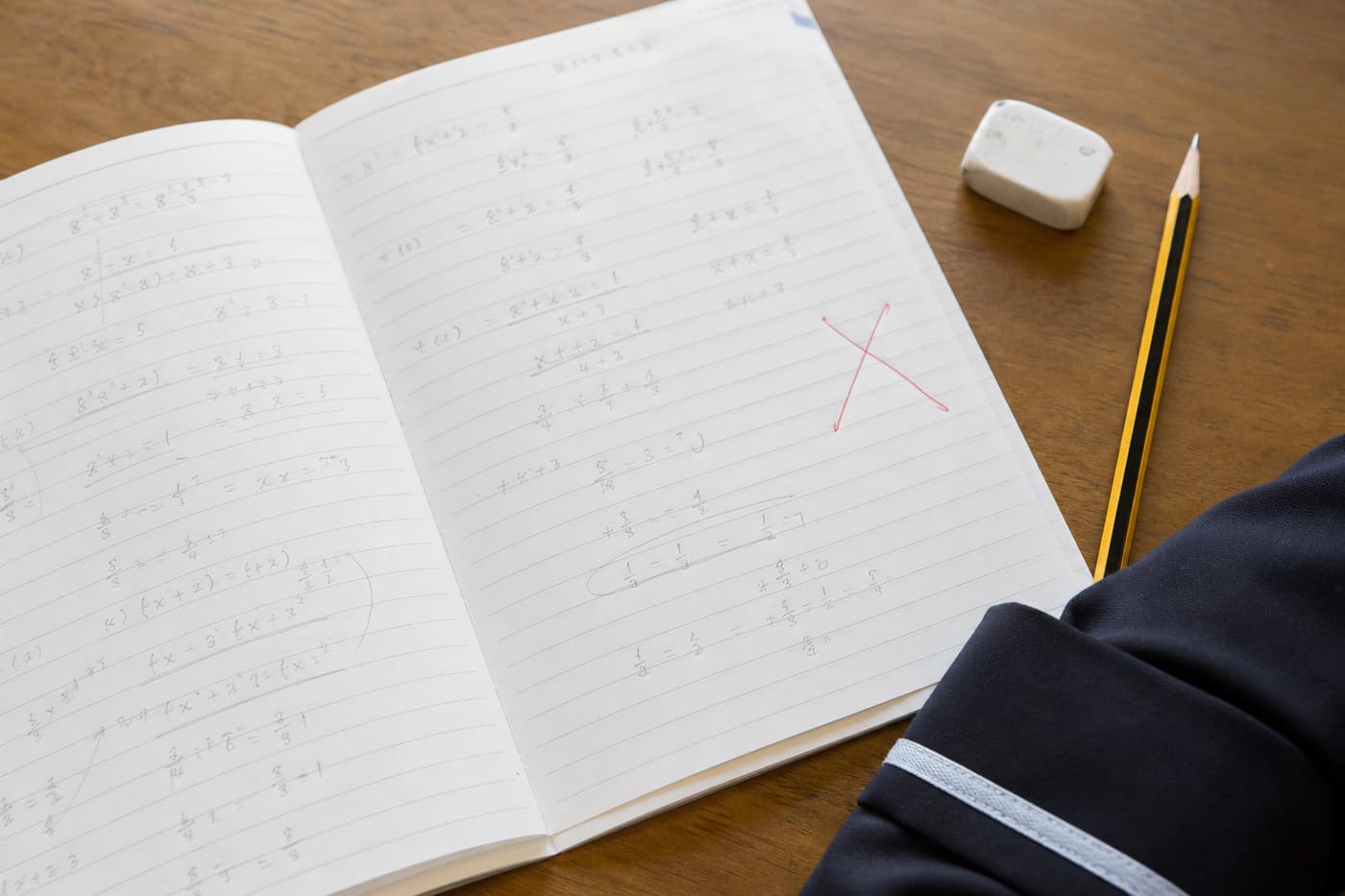
Homework is taking longer than it should.
If a short homework task turns into an evening of frustration, the issue may be a missing foundation. Extra practice will not help much if the learner does not understand the step they are practising.
Your child says they are bad at Maths.
This is often a confidence signal, not a fixed truth. When learners feel defeated, they avoid asking questions and fall further behind. Early support can interrupt that cycle.
Test anxiety is becoming part of the routine.
Some learners know parts of the work but freeze when questions are unfamiliar or timed. A tutor can help with method, exam habits, and repeated exposure to problem types.
Marks are slipping despite effort.
When effort is not turning into results, parents should look for the gap underneath the current topic. Maths builds layer by layer, so one weak area can affect several terms of work. A learner who never fully grasped fractions will struggle later with ratios, algebraic fractions, and eventually calculus, even if they are working hard on the topic in front of them right now.
What the warning signs look like at each phase.
The signs show up differently depending on the learner's grade, which is why a one-size approach rarely works.
In the Senior Phase (Grades 7 to 9), the shift from arithmetic to algebra is where most learners start to wobble. Suddenly letters stand in for numbers, and a learner who was confident with times tables can feel lost the moment x and y appear in an equation.
In the FET Phase (Grades 10 to 12), the subject splits into distinct topics, functions, trigonometry, financial maths, calculus, and each one depends on solid algebra underneath it. A learner who is shaky on factorising will hit the same wall again in every new topic that uses it, which is why problems that seem to appear "out of nowhere" in Grade 11 often trace back to a Grade 9 gap that was never closed.
How long a homework task should actually take.
As a rough guide, a Grade 8 or 9 learner working on a familiar topic should be able to finish a normal homework set in 30 to 45 minutes. If it is regularly stretching past an hour, with visible frustration or repeated re-reading of the same question, that is a signal worth acting on rather than waiting out.
You are not sure whether online or in-person help is best.
The right format depends on the learner. Online lessons suit many busy families because they are easier to attend consistently, and a shared screen means the tutor can work through the exact same problem the learner is stuck on in real time. Selected in-person lessons in Musgrave can help learners who benefit from direct face-to-face support and fewer distractions than working from a bedroom or a busy home.